
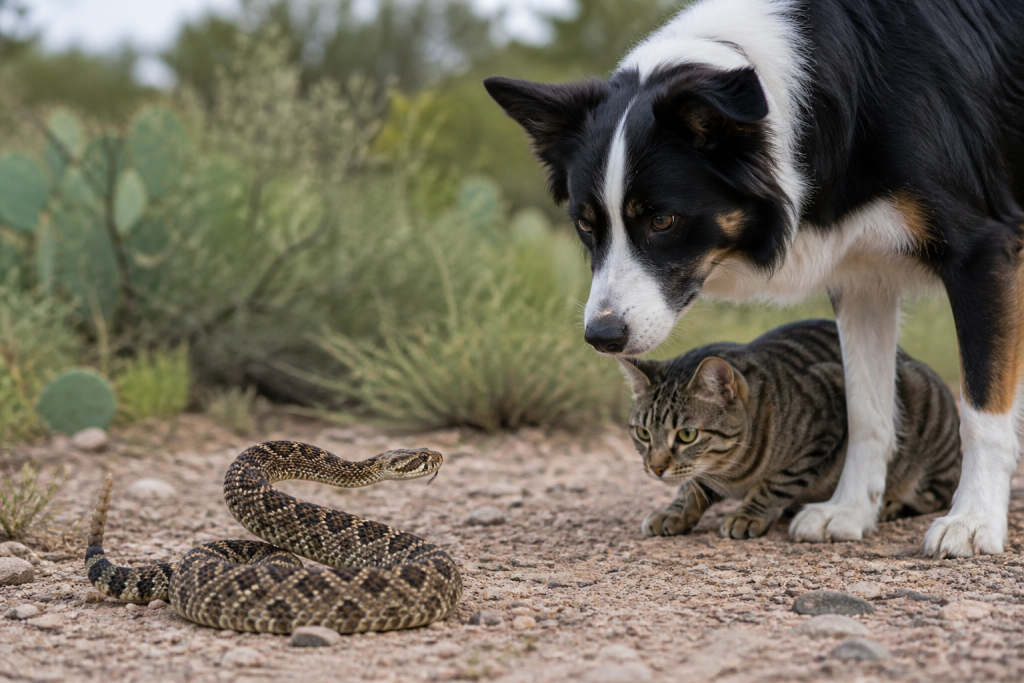
If you live in Texas, you know snakes are part of the landscape—whether you’re hiking our Hill Country trails, hanging out in your backyard or spending time at one of our beautiful rivers and lakes. For curious dogs (and adventurous cats), a slithering reptile is often too tempting to ignore. Unfortunately, some of those snakes pack a poisonous punch.
The Venomous Snakes of Texas 🐍
Texas is home to four main groups of venomous snakes: A bite from any of these snakes can be deadly.
- Rattlesnakes
- The most common venomous snake in Texas.
- Known for their distinctive rattle (though not all will give a warning).
- Venom can cause severe swelling, tissue damage, and internal bleeding.
- Copperheads
- Widespread in wooded or brushy areas.
- Their coppery-orange camouflage makes them hard to spot.
- Bites are usually less deadly than rattlesnakes but still very painful and dangerous for pets.
- Cottonmouths (Water Moccasins)
- Found near rivers, lakes, and swamps.
- They often open their mouths wide to display the white interior (their “cotton mouth”).
- Venom causes tissue destruction and can lead to serious infection.
- Coral Snakes
- Recognizable by their red, yellow, and black bands. Remember the rhyme red on yellow, kill a fellow. Red on black, okay Jack” is NOT alwayscorrect.
- Unlike pit vipers (the other three), coral snakes have neurotoxic venom that affects the nervous system—and a bite is usually fatal without supportive care.
IF YOU BELIEVE YOUR PET WAS BITTEN BY A CORAL SNAKE, HEAD STRAIGHT TO YOUR NEAREST EMERGENCY ROOM.
Why Pets Are at Risk 🐾
Dogs are naturally curious. They’ll sniff, paw, or bark at snakes—and may not back away when threatened. Some dogs do not back away even when bitten. They can receive multiple bites which can decrease their chances of survival. Cats, on the other hand, are stealthy hunters. They’ll stalk and pounce, sometimes successfully, but not without risk of a bite.
👉 Let’s relate: Imagine your Labrador proudly trotting up with a “new toy” … and instead of carrying a stick, you realize it’s a rattlesnake. That’s a story us Texas vets hear more often than you’d think.
Signs of a Snake Bite in Pets ⚠️
- Sudden swelling (especially on the face or limbs)
- Puncture wounds (may bleed or ooze, the blood coming from the bite often looks black)
- Pain, yelping, or pawing at the area
- Lethargy or collapse
- Difficulty breathing, drooling, or vomiting (more severe cases)
Not all bites inject venom (“dry bites” happen), but you can’t take the risk—always assume venom was delivered.
What To Do If Your Pet Is Bitten 🚨
- Stay calm and keep your pet calm—movement (any increase in your pets heart rate) can spread the venom faster.
- Get in the car, head our way and call us immediately. Time is critical. If your pet gets bitten by a venomous snake outside of our normal business hours, head straight to your closest veterinary ER.
- Do NOT try to suck out venom, cut the wound, apply pressure or apply a tourniquet.
- Do NOT give your pet any human pain medications.
- If possible, note the snake’s appearance or snap a picture from a safe distance (don’t try to catch it).
We see many snakebites every year and carry the pit viper antivenom. Supportive care like fluids, pain relief, and wound management are just as important to help your pet through this critical time.
Prevention Tips 🛡️
- Keep pets on a leash during hikes.
- Avoid tall grass, brush, or woodpiles where snakes hide.
- Don’t let pets roam near rivers or ponds unsupervised.
- Consider the rattlesnake vaccine for dogs in high-risk areas—it doesn’t make them immune but may reduce severity and buy you more time to get your pet to us.
The Bottom Line ❤️
Living in Texas means sharing the outdoors with snakes. While most encounters won’t end in a bite, knowing the risks, recognizing the signs, and acting fast can save your pet’s life.
At the end of the day, awareness is the best protection—because every extra tail wag and every extra purr is worth it.
