
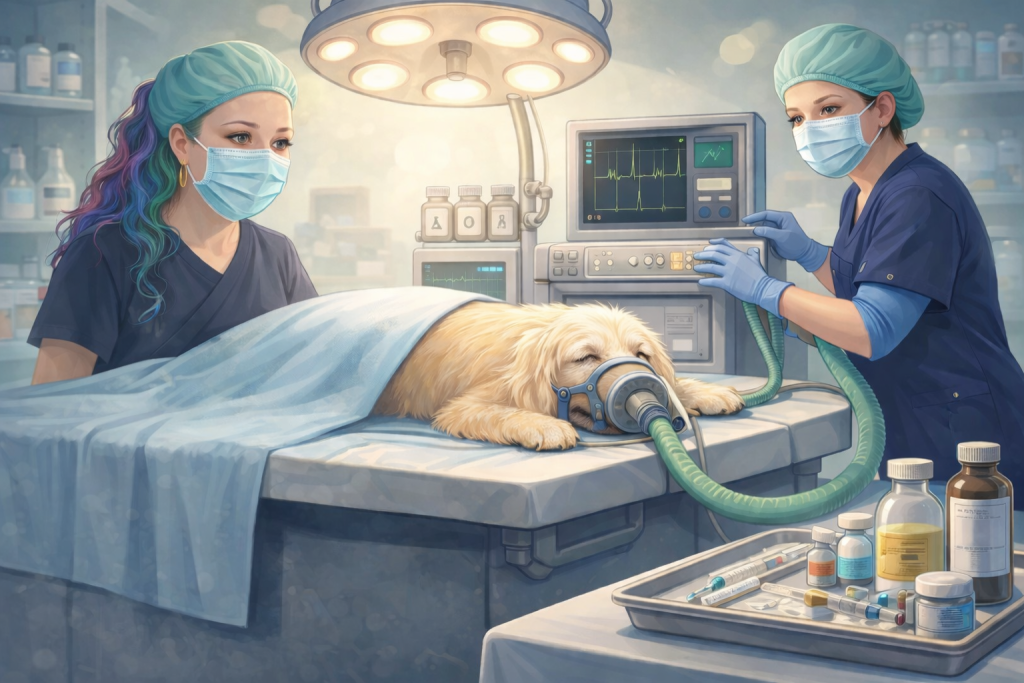
Let’s be honest: when we tell you your pet needs to be anesthetized, it can feel scary. Whether it’s for a routine spay or neuter, a dental cleaning, or something more serious, that moment often triggers the same gut reaction:
“Will my pet wake up?”
You’re not alone in feeling that way. Anesthesia is one of the top concerns pet parents have—and understandably so. After all, your pet is family. The idea of them being unconscious in a hospital setting can feel overwhelming.
The good news? Veterinary anesthesia has come a long way, and it’s safer than ever—especially when done thoughtfully, with modern protocols and close monitoring.
Let’s break it down in a way that makes sense (without all the medical jargon).
🐶 First: What Is Anesthesia, really?
Anesthesia is a controlled loss of consciousness that allows pets to undergo procedures without pain, stress, or movement. Think of it as your pet being in a deep, carefully managed sleep.
There are different types:
- General anesthesia: Full unconsciousness (used for surgery, dental work, etc.)
- Sedation: Milder, used for short or less invasive procedures (like x-rays or minor wound care)
- Local anesthesia: Numbs a specific area (like a tooth or paw)
🧪 How We Keep It Safe
1. Pre-Anesthetic Testing
Before we even think about anesthesia, we check your pet’s:
- Bloodwork (to evaluate liver, kidneys, and more)
- Heart health (sometimes via ECG or chest x-rays)
- Breed risks and age
This helps us tailor the anesthetic plan for your individual pet—because not all animals are the same, and their anesthetic shouldn’t be either.
2. Monitoring, Monitoring, Monitoring
During anesthesia, your pet’s:
- Heart rate and rhythm
- Respiratory rate
- Blood pressure
- Oxygen levels
- Temperature
- End-tidal CO2
- Mucous Membranes
- Pulse Quality
…are constantly monitored by trained staff using specialized equipment—just like in a human hospital. If anything changes, we can adjust immediately.
3. Pain Management
Anesthesia isn’t just about keeping pets still—it’s also about keeping them comfortable. We use pain medications before, during, and after the procedure to make recovery smoother and less stressful.
🐾 But Isn’t Anesthesia Risky?
Every medical procedure carries some risk—but with proper screening and monitoring, complications are rare.
Here’s a helpful way to think about it:
Driving a car is risky too. But you wear your seatbelt, follow the rules, and stay alert.
Anesthesia is no different—it’s all about minimizing the risk with safety checks, good planning, and trained professionals.
In fact, many of the pets we anesthetize are older, sick, or have complex medical needs—and they do just fine.
💬 Real Talk: “I’m Still Nervous.”
Of course you are. That’s totally normal.
We know that for you, it’s not just “a spay” or “a dental.” It’s your Daisy or your Max or your Bella—the pet who sleeps in your bed, greets you at the door, and somehow knows when you’re having a bad day.
We get that this is emotional. And we’re not just here to take care of your pet—we’re here to support you, too.
🏥 A Common Scenario
Let’s say you bring in your 5-year-old dog, Luna, for a dental cleaning under general anesthesia. She’s healthy, happy, and you’re just trying to keep her teeth clean and her breath kissable.
You hesitate— “Can’t you just clean her teeth while she’s awake?”
Unfortunately, no. Pets won’t sit still, say “Ahhh,” and spit when we tell them to. Anesthesia lets us clean under the gumline, and remove painful teeth—safely and completely pain-free.
A couple of hours later, Luna is waking up, groggy but comfortable. By dinnertime, she’s wagging her tail and ready to eat.
❤️ Final Thoughts
Anesthesia isn’t something we take lightly—it’s one of the most carefully planned parts of any veterinary procedure. Your pet’s safety and comfort are our top priorities, and we treat them as if they were our own.
So next time the topic of anesthesia comes up, remember:
- You’re not alone in feeling nervous
- We’re here to answer every question (big or small)
- Modern veterinary anesthesia is safe, effective, and essential for many procedures
And most importantly—your pet is in good hands.
Got questions about an upcoming procedure? Call us. We’re always happy to walk you through what to expect—before, during, and after anesthesia. 🐕🦺🐈⬛
